
Award-winning wines

Nature conservation
Farming
History

Discover Bangor
More than a vineyard
There is a lot more to Bangor than you can see from the cellar door.
Beyond the vines lies a remarkable Tasmanian property of more than 6,000 hectares – stretching across rolling farmland, native forests and wetlands to 35 kilometres of coastline.
It is a working farm, a vineyard, a haven for wildlife and a place with thousands of years of human history. It is also our family home.
The Dunbabin family has cared for Bangor since the 1890s. Today, we continue to farm the land, grow grapes, protect its natural environment and share this special place with the people who visit us.
Here are a few of the stories behind Bangor.

The Vineyard
8 hectares. Three varieties. One very cool climate.
Our little patch of vines sits at 42°53' South, overlooking Dunalley and Blackman Bay.
We grow Pinot Noir, Pinot Gris and Chardonnay – varieties that love our cool maritime climate. The vines are hand-tended and the grapes hand-picked, with our wines made in small batches to capture the character of this unusual coastal site.
The vineyard is also where many of Bangor's stories find their way onto our bottles – from Abel Tasman's arrival on our coastline in 1642 to Jimmy's lonely semaphore station high above the farm.
The Farm
Bangor is farming country.
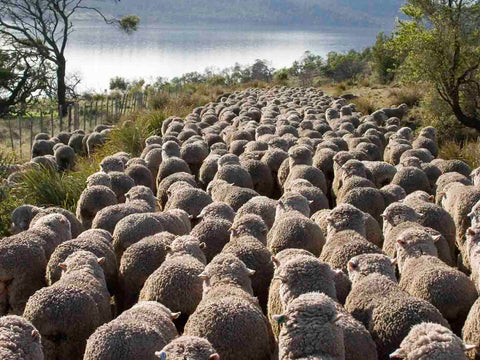
Bangor is a working Tasmanian farm, with sheep and cattle grazing across a landscape that has supported agriculture for almost two centuries.
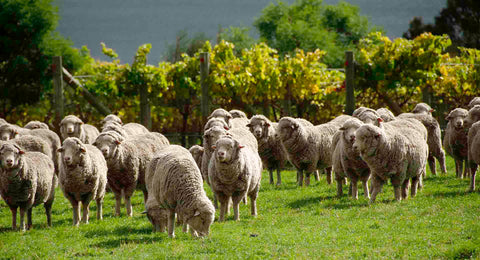
Today we run superfine Merino sheep, prime lambs and cattle alongside the vineyard. Our sheep graze extensive areas of native pasture, producing exceptionally fine wool while helping us manage the land.
Farming at Bangor is about more than what we produce. It's about looking after a remarkable property so it can continue to support farming, wildlife and people well into the future.
And there's a good chance that somewhere amongst it all you'll find another generation of Dunbabins lending a hand.

The Wild Side of Bangor
Some of Bangor's most important residents aren't people.
More than 5,100 hectares of Bangor remain covered in native vegetation, from forests and grasslands to wetlands and coastal heath. Over 2,100 hectares are permanently protected in conservation reserves.
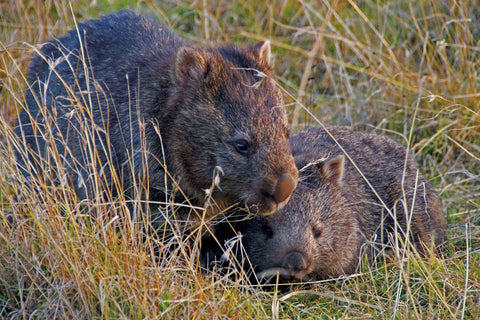
These habitats support an extraordinary variety of wildlife: Tasmanian devils, wombats, quolls, bettongs and wallabies, along with more than 120 species of birds – including swift parrots, sea eagles and Tasmanian wedge-tailed eagles.
Bangor is also carbon positive. Our native forests store more carbon each year than is emitted by our farming, vineyard, winery and tourism operations combined.
For us, conservation isn't something separate from farming. It's simply part of looking after Bangor.

A Landscape Full of Stories
If this landscape could talk, it would have quite a story to tell.
The Pydairrerme people are the Traditional Custodians of this region, with a connection to this land, coast and sea stretching back thousands of years.
European stories at Bangor begin remarkably early. In 1642, Abel Tasman's expedition came ashore on Bangor's northern coastline and planted the Dutch flag – the first recorded European landing in Tasmania.
The centuries that followed brought explorers, convicts, whalers, farmers and semaphore operators. Bangor supplied food to the Port Arthur settlement, and in the late 1800s the Dunbabin family began its own chapter here.
Many of those stories live on today – in the landscape, in old buildings and tracks, and even in the names on our wine bottles.

And we're still discovering it ourselves.
One of the wonderful things about Bangor is that, however long you've lived here, there is always something new to notice – a hidden stretch of coastline, an old ruin in the bush, a wedge-tailed eagle overhead, the first budburst in the vineyard, or simply the changing light across the bay.
Bangor is a place shaped by land, sea, nature, history and generations of people.
We're lucky to call it home, and we love sharing a little of it with you.
Come and discover Bangor for yourself.